
Science Saving Rhinos
Science

PHASE I
This Phase was successfully implemented and achieved in 2021.
This six-month Phase was conducted at Buffalo Kloof, a private game reserve in the Eastern Cape. It entailed treating the horns of two white rhinoceros bulls, Igor and Denver, with stable isotope-labelled compounds. The laboratory results of blood and fecal matter proved and concluded that there is no movement of the compound from the horn into the animal.
PHASE II
This Phase included:
- Determination of the radiological dose to the head of a rhino. These results were then compared to laboratory-based measurements using a full-scale model of a rhinoceros head.
- Determined the minimum detectable activity (MDA) required to be inserted into the horn of a rhino, to ensure that installed radiation detectors return a positive result at a given set probability.
- Conducted ongoing site visits and engagement with relevant customs and border authorities at ports of entry globally.
- The authoring of the Radiological Safety Assessment report (RSAR). Phase III will be assessed and approved by the national regulator responsible for the control of radioactive sources. The RSAR will also form part of the submission to the University’s Animal Research Ethics Committee (AREC), Clearance Certificate Number: AREC24-02-002B.
The results of research indicated that calculated dose assessments showed a close correlation. The calculated doses were approximately one-tenth of the value recommended as a dose constraint set by the International Commission of Radiation Protection (ICRP) for biota.
All the methods and procedures were assessed and approved by the University of Witwatersrand’s Animal Research Ethics Committee (AREC).

Figure 2: DOSE ASSESSMENT TO HEAD OF A RHINOCEROS

Figure 3: DETECTING RADIOACTIVE HORN IN A 20′ CONTAINER

PHASE III – PILOT PROJECT
This Phase took place in the UNESCO Waterberg Biosphere in Limpopo, South Africa, between the 24th of June 2024 and the 15th of January 2025. This was the final research phase for the rhinoceros work.
The pilot project brought together all the research work and demonstrated that the technique worked in a real-world setting. It was also the final opportunity to identify any potential issues associated with the technique prior to commercialisation. This is very much akin to a phase III trial conducted by a pharmaceutical company.
The work in this Phase entailed the following:
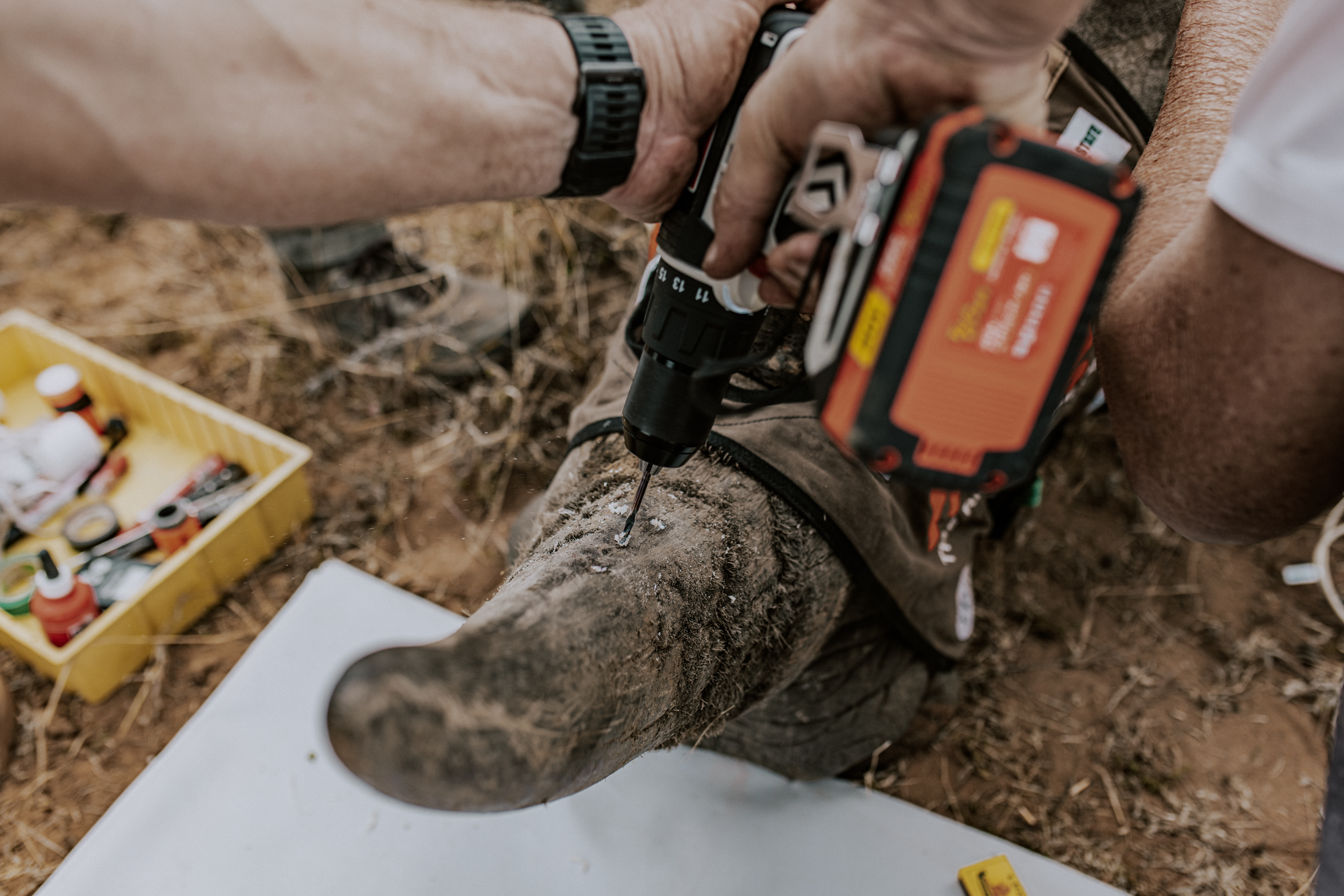
- The application of the radioisotopes into the horns of 20 animals. Insertions were done on 18 white rhinos and 2 black rhinos which were a mixture of male and female.
- This was undertaken at a secure facility, where the animals were monitored twice daily for a period of six months.
- The animals were carefully examined for abnormalities in behaviour, horn growth, and health status. This was be done by the staff based at the facility, as they were able to observe the animals daily.
- Samples from each animal were taken at the beginning and end of this phase.
- Blood samples were taken and submitted to Ghent University in Belgium for cytological analysis to align with The Rhisotope Project’s strict safety standards. As well as additional radiobiological dose assessments were done to confirm that there is no movement of the radioisotopes into the body of the animal.
PHASE IV
This phase entails deploying the technology on broader scale, as well as continued research on other species. This will be based on a repeat of procedural and research processes involved in Phases II & III of the Project. It also includes the development of training and radiation safety courses for veterinary surgeons in an ongoing manner as part of the Project framework to success.
Target Outcomes
The Rhisotope Project has key target outcomes, with different aims and objectives attached to each individual aspect.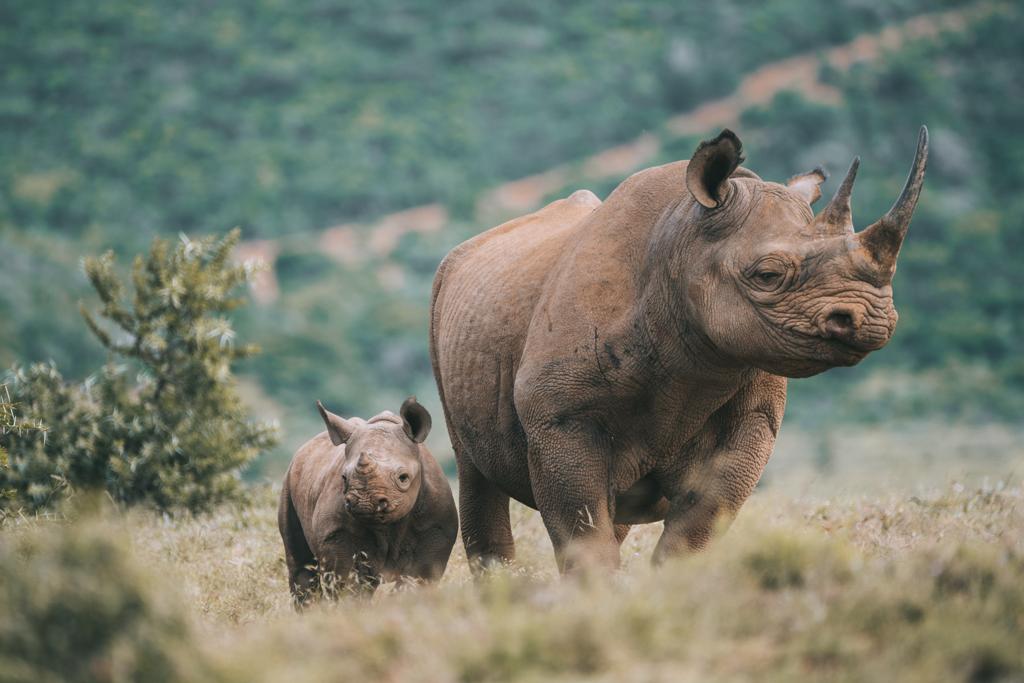
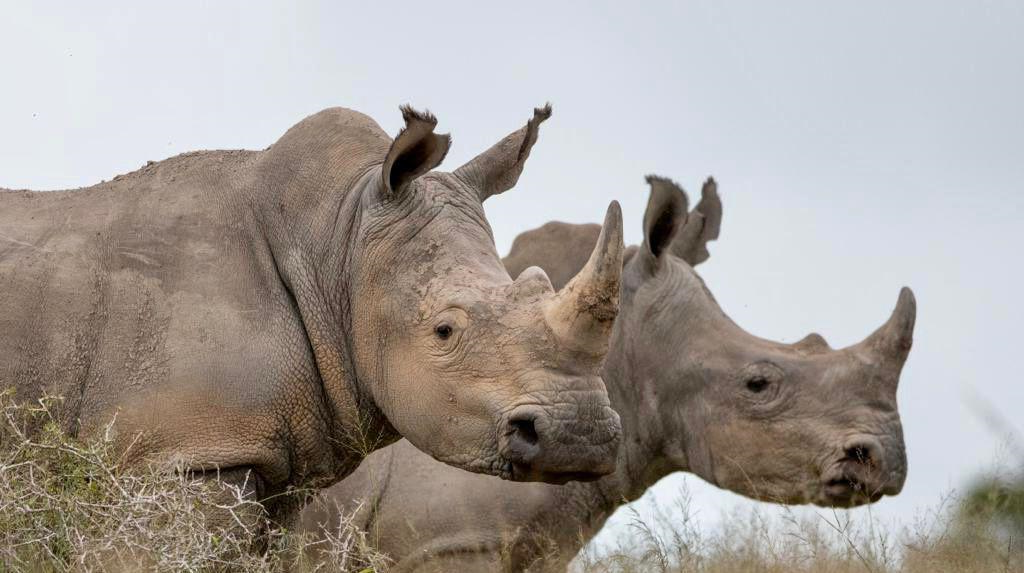
The primary intention is to apply this technology in rhino populations in southern Africa and beyond.
The first animals to receive the technology will predominantly be those that form part of privately owned rhino populations. This may come in the form of game farms, private farms, reserves, conservancies, and conservation areas.
It is also the intention to explore the possibility to apply it to populations of rhinos in the protection of National or Provincial Reserves and Parks. This will involve its own regulatory and approvals process, as dictated by the relevant body of Authority e.g. (DFFE) Department of Forestry, Fisheries and Environment in South Africa, as well as relevant Provincial bodies authorities such as LEDET (Limpopo Economic Development of Environment and Tourism).
Local communities are the most vulnerable victims of the black-market trade. By bringing in targeted philanthropic programmes and educational support initiatives, the local communities become the target of positive engagement with immediate benefits, as opposed to them being the target market for poachers, poaching syndicates, and activities.
On going engagement with law enforcement communities. Local, national, and international law enforcement agencies, nuclear security agencies, policing agencies, port authorities and independent security bodies. Examples of this include the FBI, Office of Homeland Security, Interpol, and Europol.
The Rhisotope Project
The Rhisotope Project is in the process of registering as a not-for-profit organisation.
The Rhisotope Project plans to continue research using nuclear technology to help protect other endangered species in addition to rhinos.